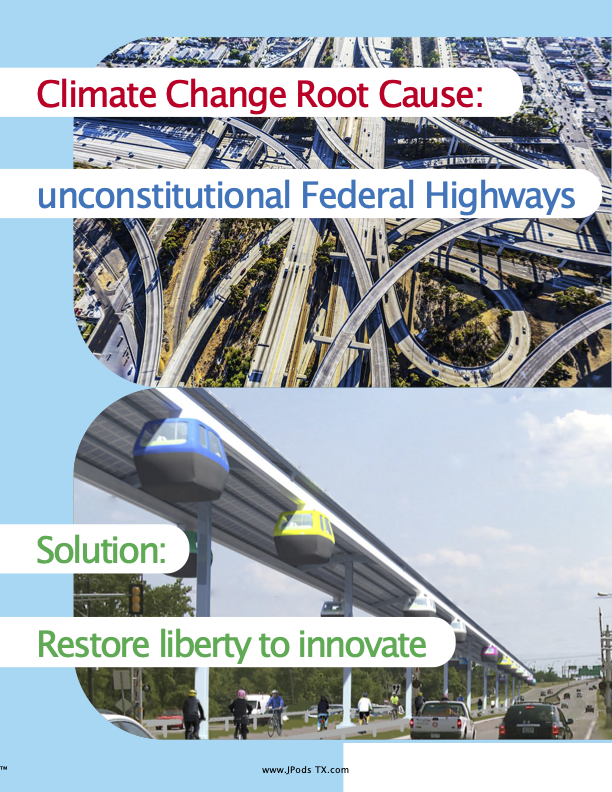
Mobility Is
Physical Liberty.
The Constitution mandates we "secure the Blessings of Liberty to ourselves and our Posterity." Mobility is physical liberty.
Society prospers when individuals profit from the division of labor by having equality of access to on-demand mobility regardless of age, ability, or wealth.
Six reasons to act now ↓Mobility is the physical manifestation of liberty. Life requires energy.
Solving Traffic.
Commutes and Cargo.
Replicate the Internet to build the Physical Internet®.
- High-speed and heavy lift (fiber optics) is railroads and aircraft
- Middle-mile (WiFi) is JPods, 1 to 35 miles.
- Last-mile (Bluetooth) is walking, bikes, Uber, ... 0-5 miles.
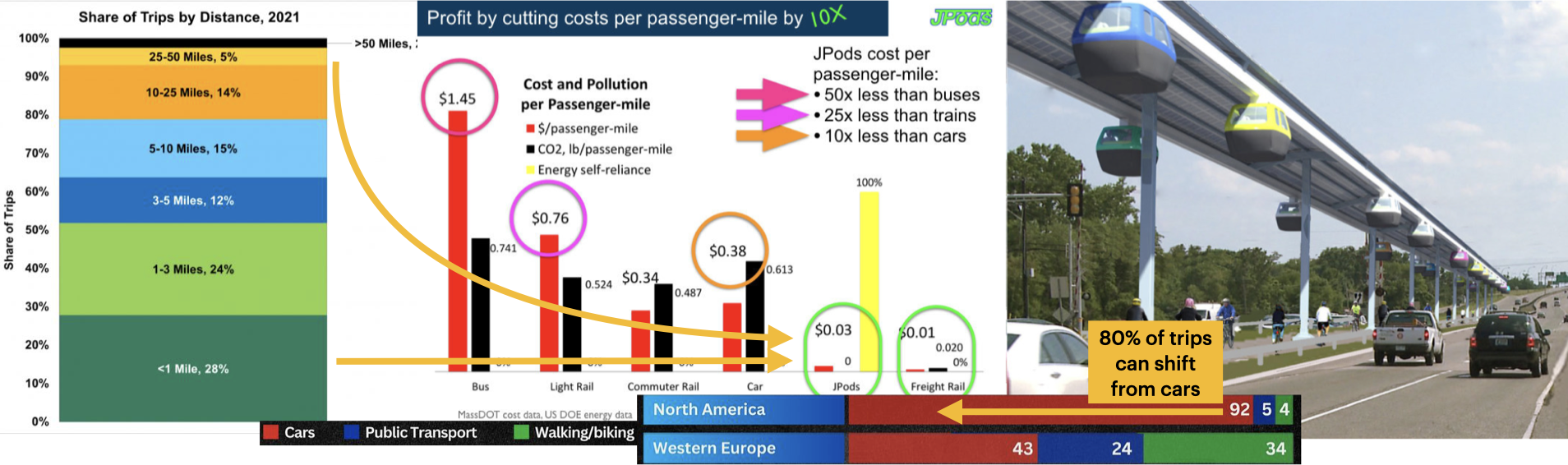
92% of trips are under 25 miles — JPods' middle-mile sweet spot. JPods cost $0.03/passenger-mile vs $1.45 for buses, $.76 for rail, and $.38 for cars.
Difficult to define is "Proximity" — closeness to resources. JPods' ability to deliver cargo to neighborhood shops and fabricators, just as big-box stores get containers delivered, will be significant.
Mobility is the physical manifestation of liberty. Life requires energy.
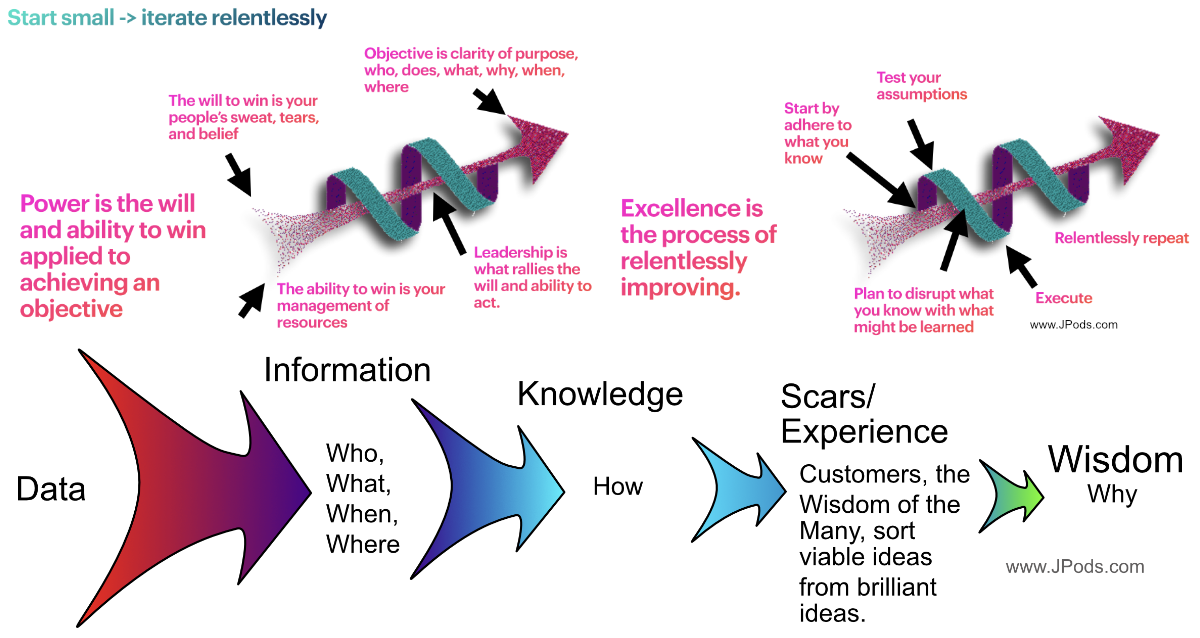
Start Small.
Iterate Relentlessly.
Remove political influence as THE dominant factor in transit decision. Privately fund networks in profitable niches to speed deployment and rally public support. Correct a century of stagnation. Freight railroads are 188 times more efficient that cars (470 ton-mpg versus moving a 200 pound person with the 25 mpg efficiency of the Model-T. Despite great efficiency, political influence replaced 45% freight railroads with roads.
Implement the 5x5 Free Market: privately funded networks 5 times more efficient than roads pay 5% of gross transport revenues to use airspace over approved public rights of way. Free markets removes political favors.
Innovate at the pace innovators can attract capital to convert traffic costs into value. Currently innovation in cars limited to rate people can afford to replace their car.
America built 260,000 miles of freight railroad in the 1800s with private capital — no taxpayer burden, driven entirely by return on investment and speed of execution. That model created the economic backbone of a continent.
JPods builds on that same principle. Private capital funds the network. The city provides only a Right-of-Way agreement. JPods pays 5% of gross revenues back to Rights-of-Way holders — turning public infrastructure into a revenue stream, not a budget line.
- Taxpayer funded
- Political timelines
- Cost overruns chronic
- Revenue to government
- Private capital only
- ROI drives speed
- 18–24 month build
- 5% revenue to ROW holders
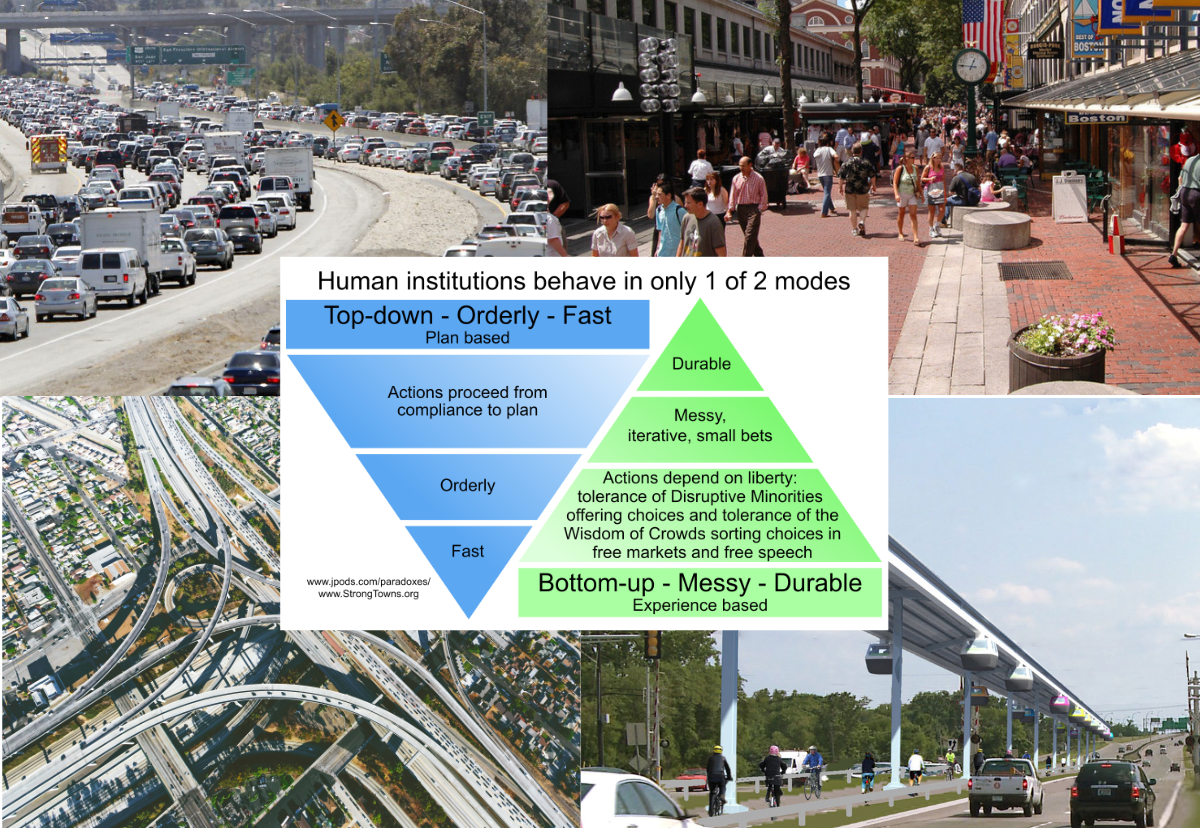
Highways are a top-down, plan-based solution — orderly and fast to build, but not durable. They fragment communities, consume land, and depend on cheap oil that is running out. Walkable cities are bottom-up, experience-based — messy, iterative, and durable. JPods enables the transition by removing enough cars that proximity, walking, and cycling become viable again.
The philosophy behind every JPods deployment — test, learn, scale.