
JPods networks gather about 5 MWh per mile of guideway per day. JPods has patents pending for integrating microgrids into our networks. These microgrids make our transport networks durable against storms, cyber attacks, grid failures, oil embargos, etc….
- We pay the capital costs for adding energy collection capacity. So there are no capital obligation to utilities.
- We gather about 5 MWh per mile per day, which is ~42,000 vehicle-miles of energy per mile per day. JPods payback models are for 10,000 vehicle-miles per mile per day. So it is likely we will have excess energy.
- We store our excess energy in microgrids to assure our transport networks are adequately supplied regardless of weather, seasons, or time of day.
- Our microgrids provide a capacitor capability to existing utilities to dump excess energy and pull energy.
- Our microgrids have capacity to clean-up AC wave forms.
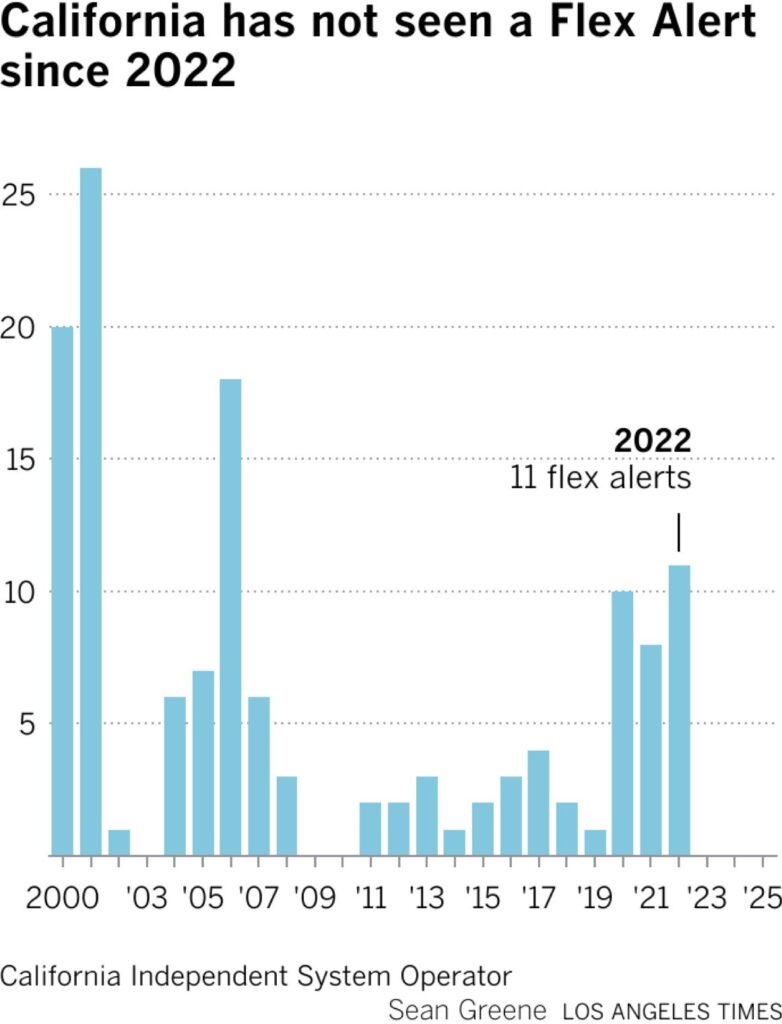
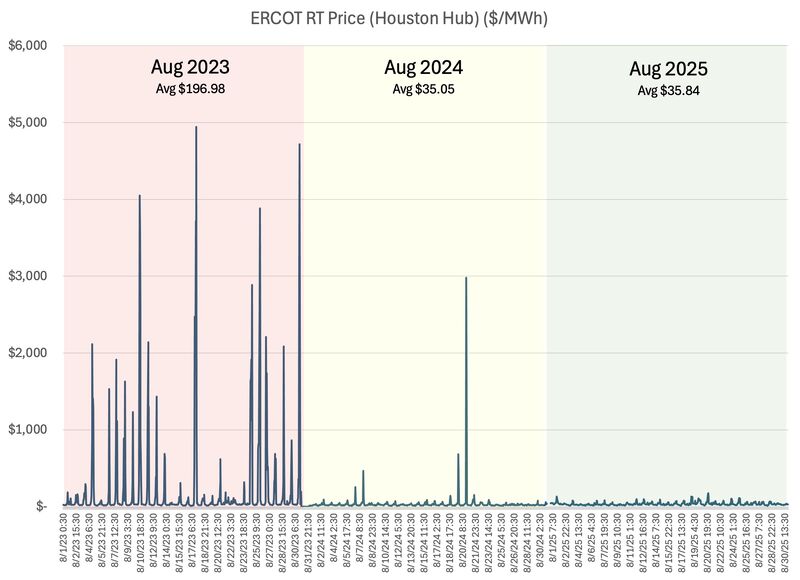
Graphs on how utility-scale batteries have stabilized the grids in California and Texas
💰 Specific Case 1: T&D Deferral and Capital Cost Avoidance
Utilities prioritize avoiding large, non-negotiable capital projects like building new substations or stringing new high-voltage lines. JPods offers a distributed solution that buys them time.
The Problem JPods Solves
-
Load Growth: Utilities face rapidly increasing electrical demand, especially from new industrial customers (e.g., data centers) and residential growth, pushing distribution feeders and substations to their maximum safe operating limits (thermal limits).
-
The Traditional Solution: A capital-intensive, multi-year project to upgrade the substation (e.g., adding a second transformer bank) or reinforce the feeder lines. These projects can cost $10 million to $50 million and are typically non-revenue generating for the utility.
JPods Value Proposition: Localized Capacity Relief
JPods’ microgrids, with their significant battery storage, are deployed directly at the point of need (along the transportation corridor), offering a temporary, non-wires alternative to a grid upgrade.
| Metric | JPods Contribution | Utility Benefit |
| Capital Cost | Zero capital commitment from the utility. JPods pays for the energy collection and storage infrastructure. | Immediate and total capital cost avoidance of multi-million dollar substation upgrades. |
| Solution Speed | Deployed in parallel with transport construction (typically faster than utility infrastructure projects). | Accelerated relief to manage localized load pockets and prevent costly service interruptions. |
| Operational Strategy | The JPods microgrid becomes a Distributed Energy Resource (DER) on the utility’s distribution system, ready to discharge its stored solar energy when the local feeder line is stressed. | The utility can defer the upgrade until the JPods capacity is exceeded, or indefinitely if load growth stabilizes. |
⚖️ Specific Case 2: Grid Stabilization and Ancillary Service Revenue
Utilities are required to maintain strict frequency and voltage stability. JPods’ high-quality, battery-backed inverter systems provide the technical capability to offer Ancillary Services—a paid service in wholesale energy markets.
The Problem JPods Solves
-
Renewable Intermittency: As utilities integrate more intermittent solar and wind (as Duke and Southern are doing), rapid frequency deviations become more common. The grid needs resources that can instantaneously inject or pull power.
-
Power Quality: An increasing amount of customer electronics and EV chargers introduce “noise” (harmonics) onto the grid, reducing efficiency and reliability.
JPods Value Proposition: Fast-Response System Capacity
Your microgrids act as an enormous, geographically distributed bank of Static Synchronous Compensators (STATCOMs) and storage systems.
-
Frequency Regulation (FCAS): JPods’ inverters can be contracted with the utility to provide Frequency Controlled Ancillary Services (FCAS). The batteries are kept partially charged, allowing them to instantly absorb excess power (when frequency is too high) or inject power (when frequency is too low).
-
Financial Benefit: This is a revenue stream for JPods, and a guaranteed reliability service for the utility. Utilities value this dispatchability over simple bulk energy.
-
-
Harmonic Filtering/Power Quality: JPods’ advanced inverters can monitor the utility’s local AC waveform and actively inject opposing currents to cancel out damaging harmonics caused by neighboring industrial or commercial loads.
-
Operational Benefit: Improves power quality and reduces component wear/failure for all nearby utility equipment and customers. This is a powerful, often overlooked, benefit.
-
Specific Case Example to Show:
“By providing Power Quality Correction via its microgrid inverters, the JPods system eliminates $3^{rd}$ and $5^{th}$ order harmonics on an industrial feeder. This extends the expected life of the utility’s distribution transformer and reduces transformer heat loss, generating documented, measurable operational savings.”